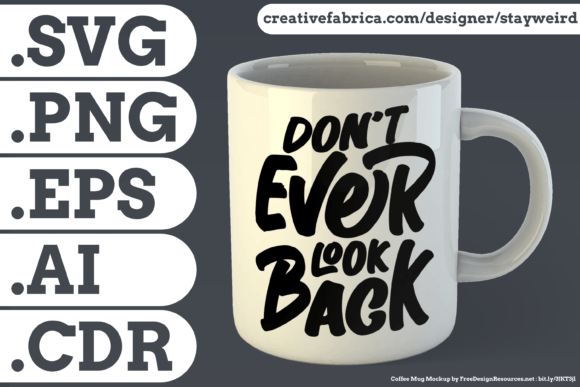
Don t Ever Look Back Quote: A Designer's Real-World Review
When I first pulled up the Don t Ever Look Back Quote design file, my immediate reaction wasn't about the motivational message itself, but rather how the typography would translate from a digital screen to actual thread. As someone who has spent years evaluating embroidery files for client projects and personal craft businesses, I know that a great-looking graphic often fails miserably when stitched. This Print Templates entry in the Graphics category caught my eye because it promises versatility across merchandise like posters, mugs, and apparel. But does it hold up under the needle? After running some mental simulations on various fabrics and project types, here is my honest assessment of how this design performs in real-life scenarios.
The First Stitch: Visual Personality and Layout
The core strength of the Don t Ever Look Back Quote lies in its clean, assertive layout. Unlike many quote designs that clutter the space with excessive flourishes or tiny decorative elements, this design relies on the weight of the lettering to carry the mood. It feels forward-thinking and resilient, which makes it an excellent candidate for custom apparel and personalized gifts. The visual personality suggests a brand that values clarity and motivation, making it ideal for boutique branding or handmade product lines focused on empowerment.
In terms of composition, the spacing between letters appears balanced, which is crucial for maintaining legibility during the digitization process. When you look at a machine embroidery design, the negative space is just as important as the stitches themselves. This design seems to offer enough room for the thread to breathe without looking sparse. Whether you are planning a sweatshirt embroidery project or a subtle detail on a tote bag, the shape of the text creates a natural flow that guides the eye across the finished product.
Real-Life Application: From Tote Bags to Nursery Decor
I recently imagined using this design for a specific client request: a set of embroidered baby onesies and a matching nursery wall hanging. The phrase "Don't Ever Look Back" resonates deeply with parents moving forward into new chapters of life. In this context, the design works beautifully as a statement piece. The bold nature of the text stands out well against soft pastels or neutral creams, creating a high-end feel that customers expect when buying baby embroidery items.
However, the utility of Don t Ever Look Back Quote extends far beyond the nursery. I envision this as a staple for Etsy seller inventory, particularly for small shop products like aprons and kitchen towels. The design's simplicity allows it to blend seamlessly into a home decor aesthetic while still delivering a punchy message. For a craft business owner, this is the kind of versatile asset that can be adapted for holiday embroidery collections or wedding gifts. Imagine stitching this onto a linen pillow cover for a newlywed couple; the sentiment fits perfectly, and the clean lines ensure it looks professional even after multiple washes.
Furthermore, the design's scalability makes it suitable for commercial embroidery projects. If you are producing patches or caps, the central focus of the text ensures that the logo remains recognizable even when reduced in size. The ability to print this on a poster or use it as a printable mockup for digital previews adds another layer of value for designers who need to showcase their work before committing to production.
Where Caution is Required: Fabric and Technique
While the design is strong, no single file is perfect for every situation. There are specific areas where Don t Ever Look Back Quote requires careful consideration. If you are working with a small hoop size, such as those used for wrist cuffs or delicate jewelry pouches, you must verify that the lettering doesn't get cut off or become too cramped. Tiny lettering can sometimes lose definition if the stitch density is too high, leading to a muddy appearance.
Textured fabrics present another challenge. While a heavy cotton canvas tote bag will handle this design with ease, thin or stretchy fabrics require a robust stabilizer system. Without proper support, the tension of the satin stitch could cause the fabric to pucker, ruining the crispness of the quote. Similarly, applying this design to dark fabric demands a choice of thread colors that offers sufficient contrast. A light-colored script on a black background might require an underlay pass to ensure the text pops, whereas a dark thread on dark fabric would simply disappear.
Curved surfaces like caps also demand attention. The curvature of a hat can distort straight lines, so testing the design's alignment is essential before mass production. Additionally, if the design includes any intricate decorative accents or detailed corners, these areas are prone to thread breaks if the machine speed is too fast. Always inspect small details closely to ensure they survive the stitching process intact.
Practical Notes for the Embroidery Designer
Before you commit this design to your next production run, there are several technical steps you should take. First and foremost, test the design on scrap fabric. This is non-negotiable. You need to see how the fill stitch and running stitch interact with your specific material. Does the thread color match your vision? Sometimes a color that looks vibrant on a monitor appears dull once stitched.
Review the stitch density carefully. High-density areas can make the fabric stiff, which might not be desirable for a soft hoodie or a baby garment. Confirm the recommended hoop size to avoid wasting time on frames that are too small. Inspect the small details of the font to ensure they won't snag or fray over time, especially for products that need frequent washing.
It is also wise to test the design in black and white mockups. This helps you visualize the contrast and balance without the distraction of color. Compare how it looks on both light and dark fabric backgrounds to determine if you need different thread palettes for different product lines. Use the proper stabilizer for the fabric type; a tear-away might work for stable cotton, but a cut-away is often better for stretchy knits.
Finally, check the licensing terms thoroughly. Many digital embroidery files come with restrictions on whether you can sell the finished physical item or if the license is limited to personal use. Confirming these terms protects your small shop product business from legal issues down the line. Ensure you understand if you can modify the design or if it must remain exactly as provided.
Final Thoughts on Design Value
The Don t Ever Look Back Quote design offers a compelling mix of emotional resonance and practical application. It elevates the perceived value of a handmade product by adding a layer of sophistication and intent. When executed correctly, it builds customer trust and enhances brand consistency, signaling that the maker pays attention to detail.
For creators looking to expand their offerings in custom apparel or embroidered patch lines, this file provides a solid foundation. It is a reminder that good design is not just about looking pretty on a screen; it is about how the threads sit, how the fabric behaves, and how the final finished product makes the recipient feel. With a bit of pre-production testing and thoughtful execution, this design can become a standout piece in your portfolio.