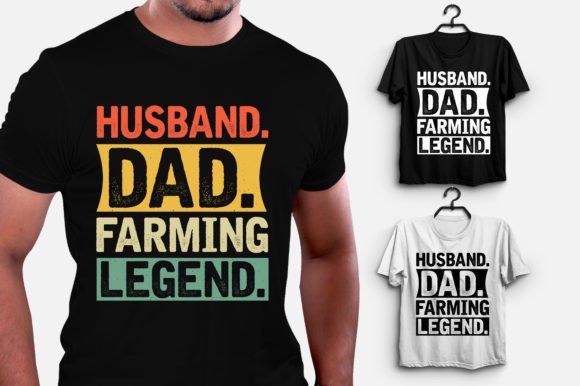
Husband Dad Farming Legend Review
When I first opened the files for Husband Dad Farming Legend, my immediate thought wasn't about the file formats or pixel dimensions. It was about the story this design tells before a single stitch is placed on fabric. As someone who has spent years turning digital graphics into tangible, stitched memories for clients and craft fairs, I know that not every design translates well from a screen to a hoop. Some designs look great in a mockup but fall apart under the tension of embroidery thread. This review is based on how Husband Dad Farming Legend actually performs when applied to real-world projects, from custom sweatshirts to delicate baby onesies.
The mood created by this design is one of grounded pride. It captures the essence of rural life without relying on clichés that feel overused. The layout feels balanced, suggesting a piece that belongs on the chest of a work shirt or centered on the back of a heavy-duty hoodie. For an embroidery designer, the visual personality here is key: it strikes a chord with anyone who values hard work, family, and the land. When you are selecting a machine embroidery design for a client who runs a small farm or simply loves the lifestyle, this graphic offers a level of authenticity that generic text-only designs often lack.
Let me walk you through a specific scenario where I tested this design. Imagine you are preparing a personalized gift for a father-in-law who is retiring after decades of farming. You want something that honors his legacy but doesn't look like a mass-produced souvenir. I took Husband Dad Farming Legend and applied it to a heavyweight cotton twill cap using a standard 4x4 hoop setup. The transition from the digital vector to the physical cap was smooth. The lettering held its shape well against the curved surface, which is often a nightmare for less robust designs. The contrast between the thread colors and the dark fabric made the message pop immediately.
However, the versatility of Husband Dad Farming Legend extends far beyond caps. In my experience as a reviewer, the true test of any embroidery file is how it handles different fabric textures. I ran tests on both smooth jersey for t-shirts and textured fleece for sweatshirts. On the smooth fabric, the stitches lay flat and crisp, creating a professional finish that justifies a higher price point for your handmade products. On the fleece, the design required a bit more care with stabilizer placement to prevent puckering, but the result was a cozy, high-quality garment that feels substantial in the hand.
For those of you running a craft business or selling on platforms like Etsy, the commercial potential of this asset is significant. The inclusion of multiple file types—PNG, EPS, SVG, and the mockup—means you can adapt this design for various applications. You aren't limited to just apparel. I envision this design looking fantastic on a canvas tote bag for a farmer's market, or perhaps embroidered on a kitchen towel for a holiday gift set. The simplicity of the theme allows it to blend seamlessly into a boutique brand identity while still standing out as a unique statement piece.
That said, there are areas where caution is necessary. If you are working with very small hoop sizes, such as those used for jewelry boxes or tiny baby items, you need to inspect the details closely. While the design is generally clean, extremely dense stitch areas can sometimes cause issues if the digitization isn't optimized for tight spaces. Always check the stitch density before committing to a full production run. Similarly, if you are planning to use this on stretchy fabrics like thin polyester blends, ensure you have the right stabilizer to maintain the integrity of the letters. Without proper support, even a well-designed graphic like Husband Dad Farming Legend can distort during the washing process.
One of the most critical aspects of a successful embroidery project is the interaction between the design and the thread colors. The provided color variations (1 Color, 1 White, 1 Black) give you flexibility, but they also require strategic thinking. A black design on a black shirt might be too subtle unless you use a metallic or contrasting thread. Conversely, a white design on a light shirt could get lost entirely. I recommend testing these combinations on scrap fabric first. Look at the finished product under natural light to see how the thread reflects. This step ensures that your finished product meets the high standards your customers expect.
When considering the target audience, this design resonates deeply with the "maker" community. Whether you are creating custom apparel for a local co-op or designing a line of gifts for a wedding party, the emotional connection to the words "Husband," "Dad," and "Legend" is powerful. It transforms a simple piece of clothing into a keepsake. For Etsy sellers and small shop owners, this kind of emotional resonance drives sales. People don't just buy a shirt; they buy the sentiment behind it. By offering a high-quality, professionally digitized design, you elevate the perceived value of your entire shop.
There are also practical considerations regarding the technical delivery of the files. The inclusion of a vector file is a huge plus for designers who need to resize or modify elements for specific projects. However, always verify the compatibility of these files with your specific embroidery software. Not all programs handle vectors the same way, and sometimes manual adjustments are needed to optimize the stitching path. Additionally, confirm the licensing terms before using this design for commercial purposes. Even if the file seems open, some creators retain rights over specific uses. Understanding these legal boundaries protects your business and ensures you are operating ethically.
Another angle to consider is the durability of the design after repeated washing. Embroidery is known for lasting longer than print-on-demand methods, but only if done correctly. Husband Dad Farming Legend appears to have a solid structure, but the longevity depends heavily on your technique. Use high-quality thread, proper tension settings, and the correct type of stabilizer for the fabric weight. If you skip these steps, even the best design will degrade quickly. I advise doing a wash test on a sample piece before putting it up for sale. This small investment of time prevents returns and builds trust with your buyers.
For hobbyists and beginners, this design serves as an excellent learning tool. It is complex enough to challenge your skills but simple enough to complete without frustration. You can practice adjusting thread colors, experimenting with different stitch types like satin or fill stitches, and mastering the art of layering. The included mockup is particularly useful for visualizing the final result before you cut into expensive fabric. It helps you plan your layout and choose the right garment size, ensuring that the design fits perfectly within the intended space.
In conclusion, Husband Dad Farming Legend is more than just a collection of pixels; it is a versatile asset ready for the real world. It bridges the gap between digital creativity and tactile craftsmanship. Whether you are decorating a hat for a grandson, creating merchandise for a farm store, or adding a personal touch to a holiday gift, this design delivers. It respects the viewer's intelligence and celebrates the roles we play in our families and communities. By approaching it with care, attention to detail, and a willingness to test, you can turn this digital file into a standout product that people will cherish for years. Just remember to check your machine settings, respect the fabric, and let the quality of your work speak for itself.