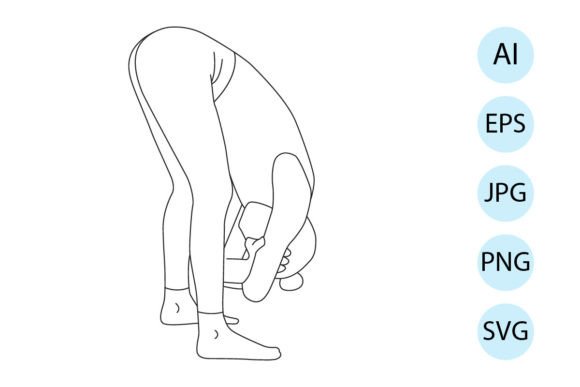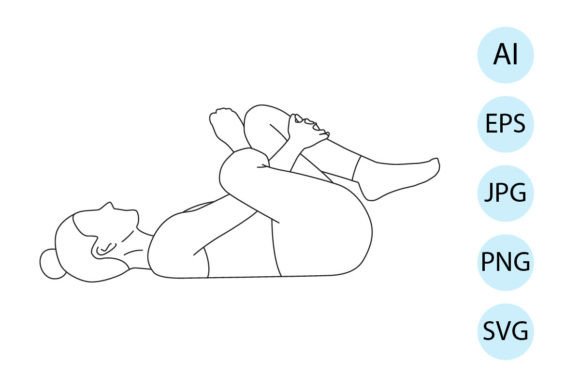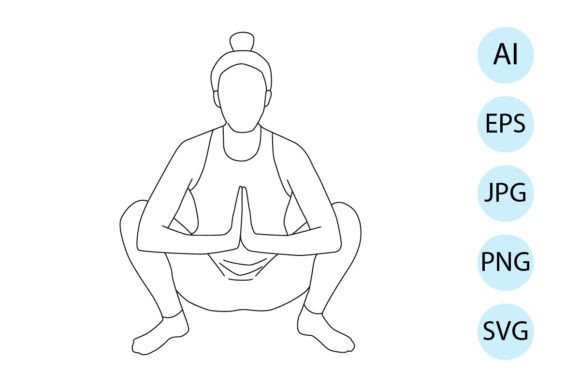
Line Art of Yoga in Garland Pose Review
As a designer who has spent years translating digital graphics into tangible stitched art, I approach every new embroidery design with a mix of excitement and skepticism. The gap between a clean vector on a screen and a finished piece on fabric can be wide. Today, I am evaluating the Line Art of Yoga in Garland Pose, a graphic that promises versatility across t-shirts, posters, and home decor. But does it hold up when converted into thread? After testing this file for potential use in custom apparel and boutique products, here is my practical breakdown of how this design performs in real-world scenarios.
The First Impression: Mood and Visual Personality
When you first look at the Line Art of Yoga in Garland Pose, what strikes you is its simplicity. Unlike complex photorealistic designs or dense fill patterns, this piece relies entirely on negative space and continuous lines to convey movement and balance. It captures the essence of the garland pose (Malasana) without cluttering the visual field. For an embroidery project, this is a double-edged sword. The minimalism suggests a modern, clean aesthetic that fits perfectly with current trends in athleisure wear and wellness branding.
The mood is serene yet active. It feels less like a rigid instruction manual and more like a fluid sketch. This makes it an excellent candidate for handmade products where the goal is to evoke a feeling rather than just display a logo. Whether you are creating a custom apparel item for a yoga studio or a personalized gift for a fitness enthusiast, the design carries a sense of calm that resonates well with the target audience. However, because it lacks internal detail, the success of the final product will depend heavily on your choice of thread colors and stitch types.
Real-World Application: From Screen to Stitch
I recently considered using this design for a small batch of embroidered tote bags intended for a local craft fair. The concept was to offer a subtle, high-end look that wouldn't overwhelm the canvas material. In theory, the Line Art of Yoga in Garland Pose should work beautifully here. The single-line nature of the illustration translates well to running stitch or a fine satin stitch, which would mimic the original vector's flow.
Imagine this design on a dark denim tote bag with a contrasting light-colored thread. The stark line against the textured fabric would create a sophisticated, almost hand-drawn appearance. Similarly, for sweatshirt embroidery, this design could serve as a minimalist chest logo or a large back print. Because the lines are open, it avoids the "heavy" feel that dense fill stitches often create on thick fabrics, allowing the garment to breathe.
For small shop product owners, this is a versatile asset. It works equally well on baby onesies, where soft lines are preferred over bold blocks of color, or on kitchen towels and aprons for a chic, modern kitchen vibe. The design's adaptability extends to embroidered patches as well; if stabilized correctly, the continuous line could create a unique, artistic patch that stands out from standard mascot-style badges.
Navigating Technical Challenges and Limitations
While the aesthetic appeal is clear, there are specific areas where this design requires careful handling. The primary challenge lies in maintaining the integrity of the line art during the digitizing process. If the stitch density is too high, the delicate lines will merge, turning the elegant pose into a solid blob. Conversely, if the density is too low, the design may look sparse and unfinished.
You must be cautious when applying this to stretchy fabric. Garments made from jersey or lightweight knits require a strong stabilizer to prevent the fabric from puckering around the thin lines. A hoop size that is too small can also distort the curve of the pose, making the figure look unnatural. Always test on scrap fabric first to ensure the tension holds.
Another critical consideration is the background. On dark fabric, a single line might get lost unless you use a high-contrast thread or add a backing layer. Furthermore, while the design is scalable, attempting to shrink it down for a cap or a small hat button might result in the loss of definition. The curves of the legs and arms need enough room to be stitched clearly. If you plan to use this for commercial embroidery on items like caps, you may need to adjust the digitization to account for the curved surface, ensuring the lines don't break apart under tension.
Impact on Product Value and Brand Perception
In the world of Etsy sellers and creative entrepreneurs, presentation is everything. A well-executed Line Art of Yoga in Garland Pose elevates the perceived value of a product. It signals professionalism and attention to detail. Customers buying handmade goods are often looking for uniqueness and quality; a crisp, clean line design suggests that the maker cares about the finer points of their craft.
This design fosters trust because it avoids the generic look of clipart. When used on wedding gifts or holiday gifts, the thoughtful application of such a specific pose adds a personal touch that mass-produced items lack. It shows that the creator understands the subject matter. For boutique branding, this graphic can serve as a signature element, reinforcing a brand identity centered on wellness, balance, and simplicity.
However, the design must be executed flawlessly. Any jagged edges or missed stitches will undermine the professional look. The difference between a $50 custom pillow cover and a $15 knock-off often comes down to the precision of the stitching. By choosing a design that relies on line weight rather than heavy fills, you are betting on skill and execution, which pays off in customer satisfaction.
Essential Designer Notes for Success
Before you commit this design to a production run, keep these practical tips in mind. First, always review the file formats and machine compatibility provided by the source. While the description mentions it is suitable for various uses, not all digital embroidery files are created equal. Ensure the file is optimized for your specific machine.
Second, pay close attention to thread colors. With line art, the thread itself becomes the drawing tool. Test different shades to see how they interact with your chosen fabric texture. A metallic thread might add a nice sheen but could snag easily, while a matte cotton thread offers a classic look. Don't forget to check the stabilizer; for this type of design, a cut-away stabilizer is often safer than tear-away to maintain shape over time.
If you are planning to sell finished items, confirm the licensing terms immediately. Some graphics allow for commercial use only on a limited number of units, while others require a separate license for resale. Ignoring this can lead to legal issues down the road.
Finally, create a printable mockup before stitching. Seeing the design in black and white on a mock image of a tote bag or sweatshirt can help you visualize the final outcome and identify any potential scaling issues. Compare light and dark backgrounds to ensure the contrast remains effective.
The Line Art of Yoga in Garland Pose is a strong contender for designers looking to expand their portfolio with modern, wellness-themed items. It offers a fresh take on traditional embroidery subjects, blending the discipline of yoga with the artistry of needlework. By understanding its strengths and respecting its limitations, you can turn this simple vector into a stunning finished product that customers will love.